.webp)
What’s the best pricing structure for AI recruiting tools?
Compare AI recruiting pricing models and learn which structure delivers the best ROI for your hiring team.
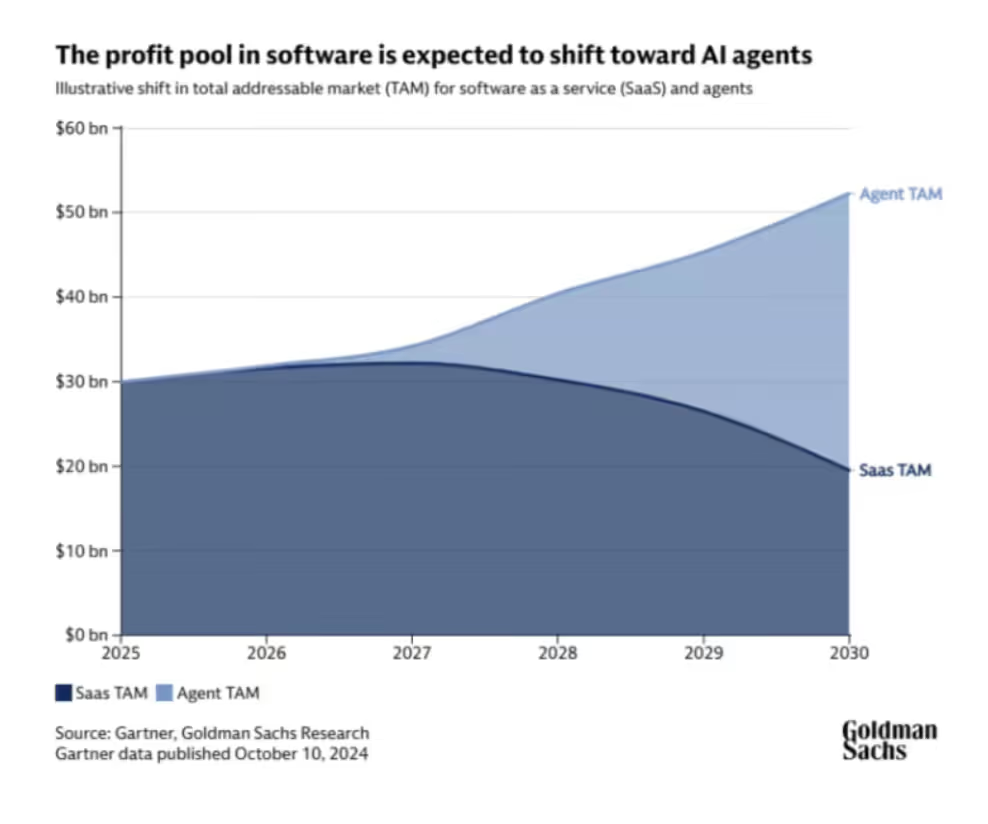
Enterprise software stocks had been sliding gradually as investors began questioning the long-term durability of the traditional SaaS model. What started as a slow re-rating quickly accelerated into a sharp correction.
During the dot-com collapse, it took nearly two years to erase approximately $5 trillion in market value, with the Nasdaq declining close to 80% from its peak. In contrast, in early February 2026, enterprise software and adjacent technology stocks shed nearly $1 trillion in market capitalization in roughly a single week of trading.
Markets rarely adjust valuations abruptly without a fundamental shift in expectations. Triggered by a surge of highly autonomous agent launches, investors began reassessing the underlying economics of SaaS itself and whether its pricing and growth assumptions remain viable in an agent-driven landscape.
Understanding pricing models is not about finding the lowest monthly number. It is about choosing a structure that aligns cost with measurable hiring results: starts, compliance checks, completed workflows, and operational work removed.
Continue reading: Best AI Recruiting Tools 2026
Common Pricing Structures in AI Recruiting Tools
AI recruiting platforms use several pricing models. Understanding how each structure scales is critical before evaluating total cost.
1. Per-Seat / Per-User Pricing
This is the most common pricing structure in recruiting technology. Platforms charge a fixed monthly or annual fee for each recruiter, sourcer, or hiring manager who uses the system.
In the market, per-seat pricing typically ranges from $50 to $300+ per user per month, depending on features and contract size. Enterprise AI platforms often move to quote-based seat licensing at higher tiers.
Pros:
- Simple and predictable budgeting
- Easy to forecast annual costs
- Familiar procurement structure
Cons:
- Cost scales with headcount, not hiring volume
- Expensive for multi-branch staffing teams
- Idle seats during slow periods still incur full cost
- Does not reward operational efficiency
This model works best in stable environments where recruiter headcount and hiring demand remain relatively consistent. It becomes inefficient when hiring fluctuates or when throughput matters more than logins.
2. Per-Job / Requisition Pricing
Some ATS and sourcing tools are priced based on the number of active job postings or requisitions. Under this structure, organizations pay based on the number of open roles at a given time.
Pros:
- Aligns cost with open hiring demand
- Useful for organizations with few recruiters managing many roles
Cons:
- Costs rise quickly during expansion or peak seasons
- Difficult to forecast if requisition volume fluctuates
- Does not account for the complexity of post-offer workflows
Per-job pricing can work for lean internal TA teams, but it becomes unpredictable when requisition counts spike.
3. Usage-Based / Per-Action / Credit Pricing
Usage-based pricing ties cost to actual system activity. Organizations pay based on actions performed, such as screenings completed, automations executed, documents validated, or workflows processed.
Instead of paying for access, teams pay for execution.
Pros:
- Cost scales with real hiring activity
- Efficient during low-volume months
- Naturally adjusts during seasonal spikes
- Aligns pricing with operational value delivered
Cons:
- Requires forecasting based on activity
- May feel less predictable without historical volume data
This model is particularly well-suited for high-volume hiring, staffing firms, seasonal demand, and environments where hiring throughput fluctuates significantly.
4. Flat Annual / Enterprise Contracts
Enterprise contracts typically involve negotiated annual agreements that include a fixed number of seats, support SLAs, security reviews, audit features, and implementation services.
Pricing is usually custom and tied to contract length and scope.
Pros:
- Predictable enterprise budgeting
- Access to premium support and compliance features
- Strong fit for large, centralized organizations
Cons:
- High upfront commitment
- Less flexibility if hiring slows
- Often bundled with features that may not be fully utilized
This structure is common for strategic HR platforms, but it can create rigidity in dynamic hiring environments.
5. Hybrid Models (Base + Usage)
Hybrid pricing combines a base subscription with additional usage-based charges. Organizations pay a minimum platform fee plus incremental charges tied to volume.
Pros:
- Predictable baseline cost
- Scales with hiring demand
- Reduces risk of extreme overages
Cons:
- Complexity in forecasting
- May include minimum commitments regardless of activity
Hybrid models aim to balance stability and scalability, but their effectiveness depends on the size of the fixed-base component.
Each of these pricing structures reflects a different assumption about how hiring works. The key question is not which model is most common; it is which model aligns cost with your actual hiring output.
What the Best Pricing Structure Should Align With
The best pricing structure is not the cheapest on paper. It is the one that aligns directly with how your hiring operation creates value.
Before committing to any AI recruiting platform, buyers should evaluate whether the pricing unit reflects real business outcomes.
Does the pricing unit correlate with actual business value?
If you are paying per seat, but value is created when candidates start work, there is a disconnect. Strong pricing models tie cost to meaningful outcomes—hires completed, starts secured, compliance validations executed, or workflows processed.
Does it avoid paying for unused capacity?
Fixed-seat or minimum-heavy contracts often create waste during slow hiring cycles. An effective structure minimizes idle spend and ensures you aren't paying for access you aren’t using.
Does it scale with hiring volume rather than headcount?
Hiring output fluctuates independently of recruiter count. Pricing that scales with headcount assumes a linear relationship that rarely exists. The optimal model adjusts as throughput expands during peaks and contracts during slow periods.
Does it allow predictable forecasting?
Finance teams need clarity. The ideal structure provides visibility into cost drivers whether that is volume, workflows, or compliance checks so organizations can confidently model low, average, and peak scenarios.
In short, the best pricing structure mirrors how hiring actually works. When pricing aligns with operational value, cost becomes a function of output rather than overhead.
Pricing Model Comparison
A simple table illustrating value and risk across pricing structures:

Final Takeaway
Pricing structure determines whether AI recruiting software becomes a growth lever or a fixed overhead.
Traditional seat-based models assume that hiring output scales with recruiter headcount. In reality, hiring demand fluctuates. When pricing is tied to seats instead of execution, organizations either overpay during slow periods or face constraints during hiring spikes. The result is misaligned costs, wasted licenses, and limited scalability.
The best pricing structures align with the value delivered. When cost scales with workflows completed, compliance checks executed, or candidates moved to start, spend reflects operational throughput rather than internal capacity. That alignment improves ROI, simplifies forecasting, and reduces financial risk.
If you want to explore how per-agent-run pricing aligns cost directly with work performed, book a demo with Firstwork.