.webp)
Top 10 Onboarding Softwares If You Hire Frontline Workers
Compare the top 10 onboarding software platforms for frontline employers. See which tools automate I-9, compliance, and worker activation.
.avif)
Why Most Onboarding Software Fails Frontline Workers
Most employee onboarding software was not built for frontline hiring. It was built for a desk-based employee who starts on a Monday, attends an orientation, completes a series of forms on a company laptop, and is productive by the end of the week.
Frontline hiring does not work that way.
A logistics company filling 200 warehouse roles needs workers verified, credentialed, and day-1 ready in days, not weeks. A healthcare staffing firm managing nurse placements across three states carries compliance requirements that change by jurisdiction. A QSR chain with 40% annual turnover cannot afford a 15-day activation process every time a shift worker exits.
The bottleneck in frontline hiring is almost never sourcing. It is activation: the gap between offer and first shift where documents go unverified, compliance checks stack up, and candidates drop off before they ever start.
The software you choose to manage that gap matters more than most buyers realize. This guide covers ten tools relevant to frontline workforce managers, what each one does well, and how to match the right tool to your actual operational problem.
Comparison Table: 10 Best Onboarding Software Platforms for Frontline Workers
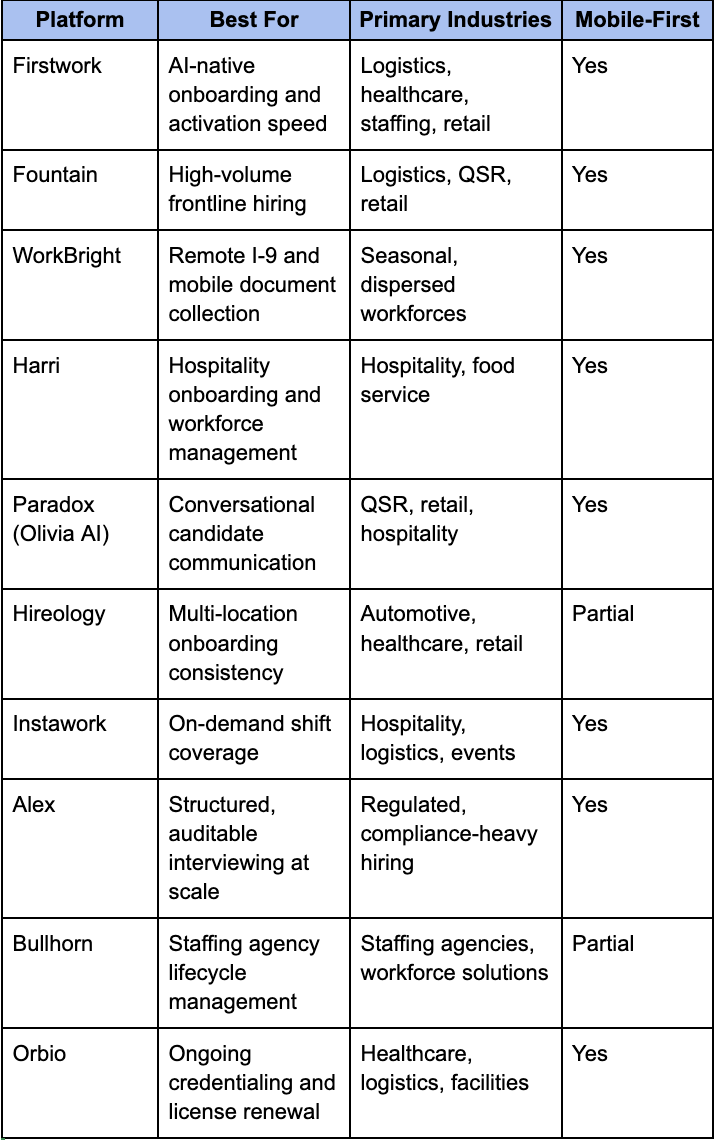
5 Criteria for Choosing Onboarding Software for Frontline Workers
Before reviewing any product, establish the criteria. These five capabilities separate tools built for frontline hiring from tools that were adapted for it after the fact.
1. Activation speed
How long does it take a candidate to move from signed offer to first shift? In frontline hiring, days matter. Candidates who wait more than a week to hear next steps drop off. The tool you choose should reduce activation time, not add process to it.
2. Compliance built into the architecture
I-9 verification, right-to-work checks, state licensing requirements, and background screening: these are not optional steps, and they cannot be afterthoughts. A tool that treats compliance as a checklist at the end of the workflow is a different product from one where compliance is built into every step. Know which one you are buying.
3. Document handling that goes beyond collection
Collecting documents is not the same as verifying them. A candidate can upload a blurry photo of an expired license, and a basic onboarding tool will mark it complete. Frontline hiring requires verification: checking that documents are valid and current and match the candidate's application. That capability varies significantly across this list.
4. Mobile-first experience
Frontline workers do not complete onboarding on a desktop. They complete it on a phone, often between shifts, often with limited time. If the onboarding flow is not designed for mobile, completion rates will reflect that. Ask any vendor to show you the candidate-facing mobile experience before you buy.
5. Downstream integration with your HRIS, payroll, and scheduling stack
Onboarding that does not connect to payroll creates a manual handoff. Manual handoffs create errors and delays. The tool you choose should sync downstream automatically. Ask specifically: What triggers the payroll record? Who is accountable when the sync fails?
Use these five criteria to evaluate every tool on this list.
The 10 Best Onboarding Software Platforms
1. Firstwork - Best for AI-Native Onboarding and Activation Speed
Firstwork is an AI-native frontline workforce operations platform. Its core focus is the activation gap: the period between a signed offer and a worker's first shift, where most frontline employers lose candidates to slow verification, manual compliance checks, and document errors.
The platform uses AI agents to run document verification, compliance checks, and onboarding workflows end to end. Routine cases are processed automatically. Edge cases are escalated to a human with full context already assembled. Every decision is logged and auditable.
Best for: High-volume frontline employers in logistics, healthcare, staffing, and retail where offer-to-first-shift speed and compliance accuracy are the primary operational requirements.
Key differentiator: AI agents that run the full activation workflow, not just collect information. Compliance is built into the architecture. Audit-grade logging on every decision.
What to evaluate: Firstwork is built specifically for frontline activation. If your primary requirement is broad HR suite functionality or applicant tracking at the top of the funnel, assess whether Firstwork's focus on post-offer activation covers the full scope of what you need.
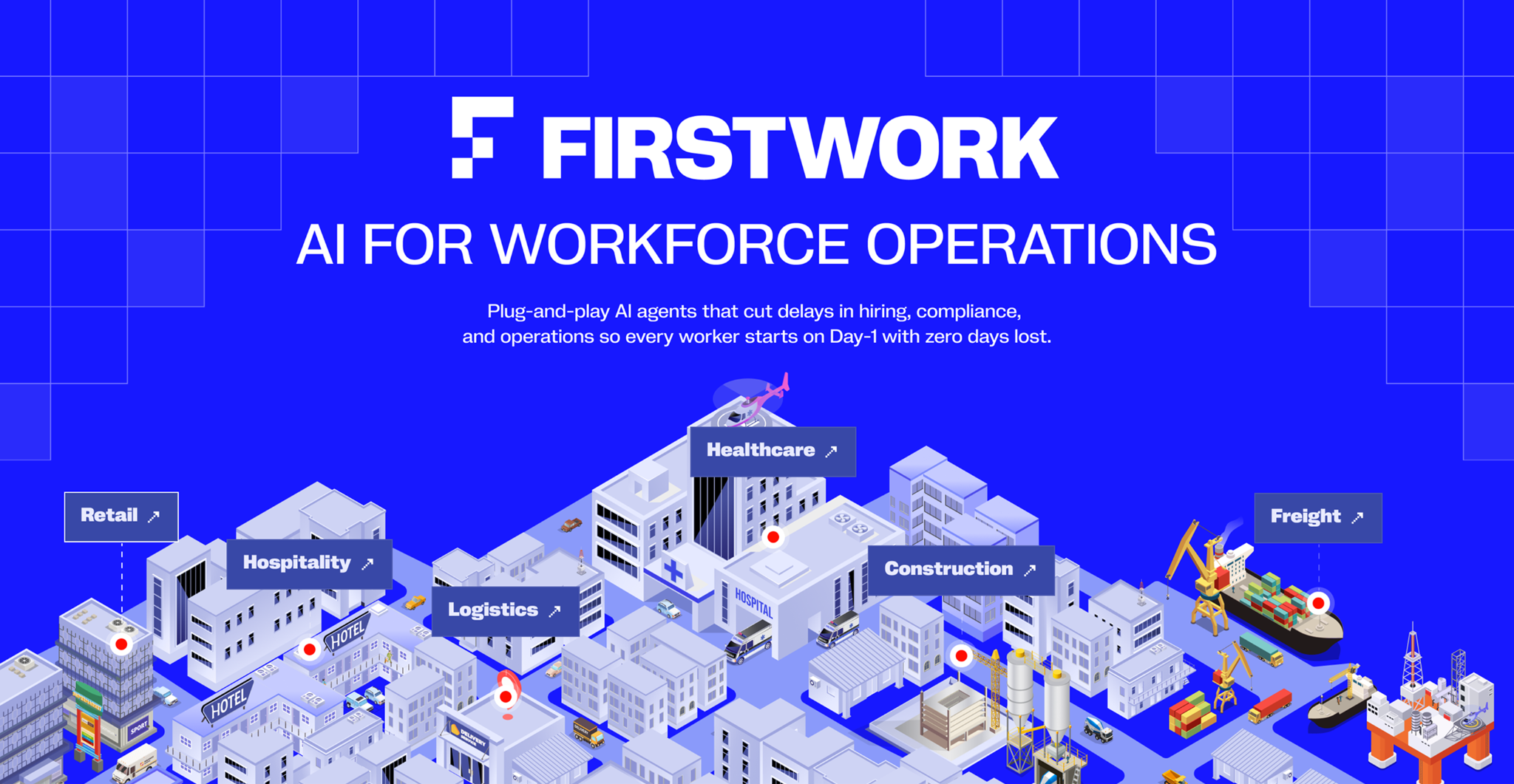
Disclosure: Firstwork publishes this blog. This entry is written to the same standard as every other tool on this list.
2. WorkBright - Best for Remote I-9 and Mobile Document Collection
WorkBright is a remote and mobile-first onboarding platform built specifically for seasonal, hourly, and geographically dispersed workforces. Its core use case is document collection and I-9 verification for workers who will never set foot in a corporate office.
The platform allows candidates to complete the full onboarding document pack from their phone, with built-in I-9 remote verification that meets federal requirements as defined by USCIS. For employers managing seasonal hiring spikes or workers across multiple sites, WorkBright removes the logistical challenge of in-person document completion.
Best for: Seasonal employers and organizations with dispersed frontline workers who cannot complete onboarding in person.
Key differentiator: Remote I-9 authorized representative workflow and mobile-first document collection designed for workers without regular computer access.
What to evaluate: If your requirements extend beyond document collection into real-time compliance decision-making and end-to-end workflow automation, assess the depth of WorkBright's compliance logic against those needs.
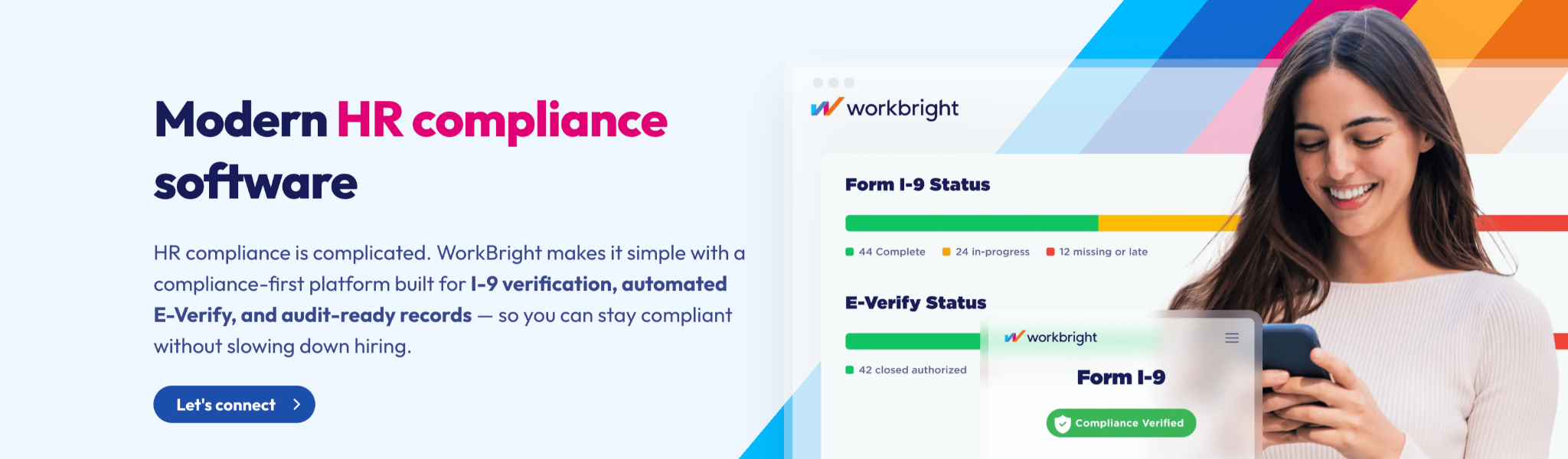
3. Harri - Best for Hospitality Onboarding and Workforce Management
Harri is a workforce management and onboarding platform built for hospitality and food service. It covers the full employee lifecycle from recruitment through scheduling, with onboarding embedded as part of the broader operational workflow rather than as a standalone module.
The platform is designed around the hospitality operating model: high turnover, shift-based scheduling, multi-site management, and the specific compliance requirements of the food service industry. Teams that already use Harri for scheduling can extend it into onboarding without introducing a separate system.
Best for: Hospitality groups, restaurant chains, and food service operators managing high turnover and shift-based workforces across multiple locations.
Key differentiator: Hiring, onboarding, scheduling, and workforce management in one platform, purpose-built for the hospitality operating context.
What to evaluate: If your compliance requirements extend significantly beyond hospitality-specific regulations, or if you operate across multiple industries, review the breadth of Harri's compliance coverage against your full requirements.
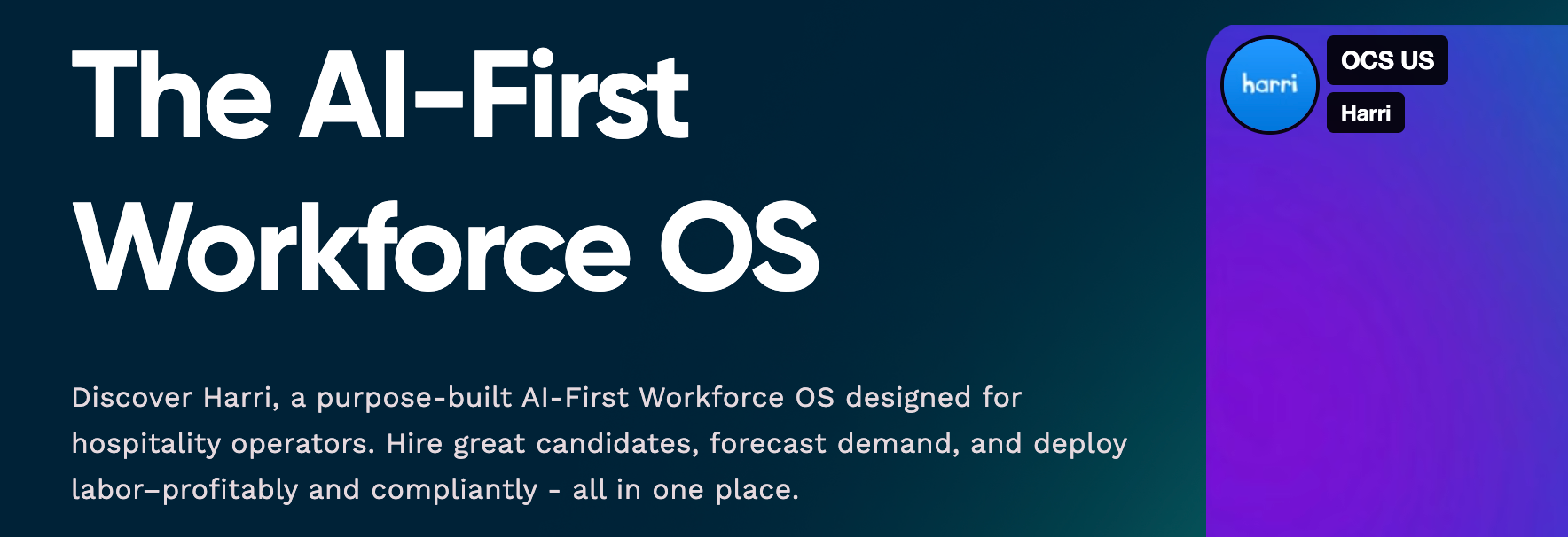
4. Paradox (Olivia AI) - Best for Conversational Candidate Communication
Paradox is a conversational AI assistant used widely in QSR, retail, and hospitality. Its primary function is candidate-facing: handling questions, scheduling interviews, sending reminders, and guiding candidates through early-stage onboarding steps via a chat interface available around the clock.
For employers whose biggest friction point is candidate communication, particularly the gap between application and interview, Paradox reduces drop-off by keeping candidates engaged and informed without requiring recruiter time for every interaction.
Best for: Employers with high application volume who need to automate candidate communication, interview scheduling, and early onboarding steps.
Key differentiator: Conversational AI that operates 24/7 across SMS, WhatsApp, and web. Candidates get answers and next steps immediately, regardless of when they apply.
What to evaluate: If your primary challenge is post-offer compliance and document verification rather than pre-offer communication, assess whether Paradox covers that layer sufficiently or whether it needs to be paired with a dedicated verification tool.
5. Hireology - Best for Multi-Location Onboarding Consistency
Hireology is a hiring and onboarding platform built for multi-location businesses. It is used primarily in automotive dealerships, healthcare, and retail, where consistent hiring processes across many sites are a significant operational challenge.
The platform provides structured hiring playbooks, onboarding workflows, and location-level accountability tools that help multi-site operators maintain process consistency regardless of which site a hire occurs at. It is designed for organizations where the hiring manager at the location level needs guidance and guardrails, not just software access.
Best for: Multi-location operators in automotive, healthcare, and retail who need hiring and onboarding consistency across sites with varying levels of HR expertise.
Key differentiator: Structured hiring playbooks and location-level accountability. Hireology is built for organizations where process standardisation across sites is the primary challenge.
What to evaluate: If activation speed and real-time compliance automation are your primary requirements, assess Hireology's capabilities in those areas against your expected volume and timelines.

6. Instawork - Best for On-Demand Shift Coverage
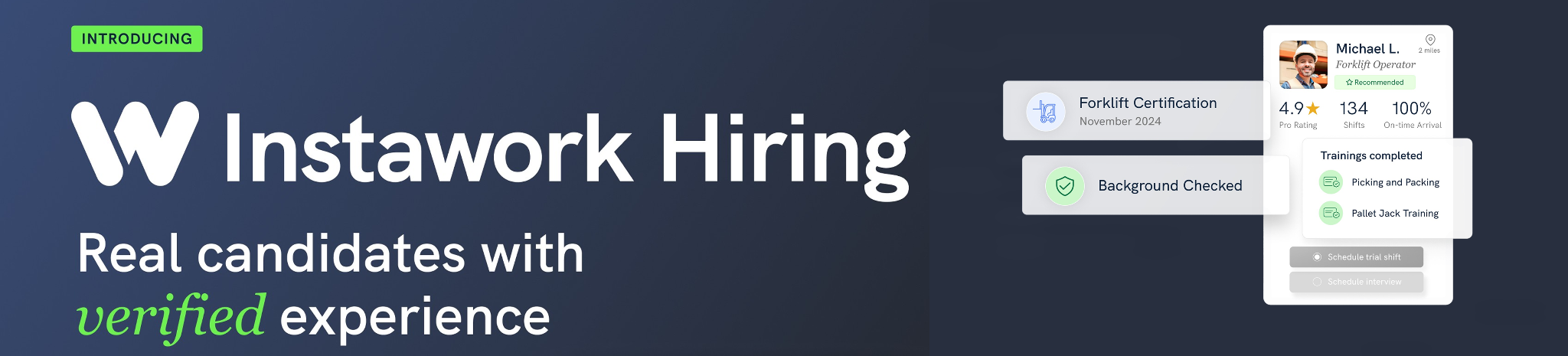
Instawork is an on-demand staffing platform for hospitality, logistics, and events. Its model differs from most tools on this list: rather than onboarding your own direct hires, Instawork operates as a marketplace connecting employers with a pre-vetted pool of workers available for shift coverage.
Workers on the Instawork platform are onboarded once at the point of joining the marketplace, and employers access that pre-verified pool when they need coverage. For shift-fill speed, the model is fast. For building a stable direct workforce, it serves a different purpose.
Best for: Employers who need rapid shift coverage from a pre-vetted worker pool and do not want to run a full direct hiring and onboarding process for every placement.
Key differentiator: A managed marketplace of pre-vetted, reliability-rated workers available for on-demand shift coverage across hospitality, logistics, and events.
What to evaluate: Confirm whether your use case is shift-fill from a marketplace or direct-hire onboarding at scale. Instawork is built for the former.
7. Fountain - Best for High-Volume Frontline Hiring
Fountain is one of the most established high-volume frontline hiring platforms on the market. It was built specifically for the application volumes that logistics, QSR, and retail employers manage daily, and its core strength is funnel management: moving large numbers of candidates through a structured hiring process efficiently.
The platform covers job posting, application collection, automated candidate communication, interview scheduling, and onboarding workflows. Its configurability across multiple locations and roles makes it well suited to large multi-site operations.
Best for: Large logistics, QSR, and retail employers managing high application volumes across multiple locations.
Key differentiator: Applicant funnel management at scale. Fountain is built to handle thousands of candidates moving through simultaneous hiring pipelines without the process breaking down.
What to evaluate: Review the depth of post-offer compliance automation and document verification capabilities against your specific requirements before committing.
8. Alex - Best for Structured, Auditable Interviewing at Scale
Alex is an AI-powered hiring platform focused on structured, compliant interviewing and candidate assessment for high-volume employers. Its core product is an AI interviewer that conducts consistent, documented interviews at scale, with a human-in-the-loop framework built around enterprise compliance and regulatory scrutiny.
The platform is designed for employers who need defensible, auditable hiring decisions at volume: every interview is documented, every criterion is logged, and hiring teams retain final decision authority throughout. Alex operates under an explicit framework that prevents AI from auto-rejecting candidates without human input.
Best for: Employers running high-volume structured interviewing who need consistent, auditable, compliance-first candidate assessment across large hiring cohorts.
Key differentiator: A documented, human-in-the-loop interview framework built for regulatory scrutiny. AI conducts and records the interview. The hiring team makes the decision.
What to evaluate: Alex's strength is the pre-offer interview and assessment layer. If your bottleneck is post-offer activation, document verification, and compliance onboarding rather than structured interviewing, assess whether Alex covers that layer or needs to be combined with a dedicated onboarding tool.
9. Bullhorn - Best for Staffing Agencies Managing Contingent Workers
Bullhorn is a recruiting and staffing platform widely used by staffing agencies and workforce solutions firms managing contingent, contract, and frontline workers. It covers applicant tracking, candidate relationship management, onboarding, and back-office operations in one platform.
For staffing firms placing frontline workers across multiple client accounts, Bullhorn provides the infrastructure to manage candidate pipelines, placement workflows, and compliance documentation at scale. Its strength is in the full staffing lifecycle rather than any single layer of it.
Best for: Staffing agencies and workforce solutions firms managing high volumes of contingent and frontline worker placements across multiple client accounts.
Key differentiator: End-to-end staffing lifecycle management: from candidate sourcing through placement, onboarding, and back-office billing in one platform built for agency operations.
What to evaluate: Bullhorn is optimized for the staffing agency operating model. If you are a direct employer running in-house frontline hiring rather than a staffing firm, assess whether the platform's architecture maps to your workflow.

10. Orbio - Best for Ongoing Credentialing and License Renewal
Orbio is a workforce readiness and onboarding platform focused on compliance-heavy frontline sectors, including healthcare, logistics, and facilities management. Its emphasis is on credentialing, license verification, and ongoing compliance tracking for workers whose roles require specific qualifications that must remain current.
For employers who not only need to verify credentials at hire but also track license renewals, training completions, and ongoing certification requirements across a large workforce, Orbio provides the infrastructure to manage that at scale.
Best for: Frontline employers in healthcare, logistics, and facilities management where workers hold licenses or certifications that require ongoing verification and renewal tracking, not just point-of-hire checks.
Key differentiator: Ongoing credentialing and compliance tracking beyond initial onboarding. Orbio manages the full credential lifecycle, from hire through renewal, with alerts and automated follow-up when certifications are approaching expiry.
What to evaluate: Verify current product capabilities directly with Orbio before committing, particularly if your requirements span multiple regulated sectors with different credentialing frameworks.

How to Choose Onboarding Software: Match the Tool to Your Bottleneck
The right tool is determined by where your hiring process is actually breaking down. Not where you think it is. Where the data shows candidates are dropping off, delays are accumulating, or compliance failures are occurring.
Use this framework before you book a single demo:
If your bottleneck is candidate volume at the top of the funnel: Applications are coming in, but the process cannot handle the throughput. Look at Fountain or Paradox.
If your bottleneck is candidate communication and drop-off before offer: Candidates are applying but going cold before they reach onboarding. Paradox is built specifically for this layer.
If your bottleneck is structured, auditable interviewing at scale: You need defensible hiring decisions with full documentation. Alex provides the framework for this.
If your bottleneck is remote document collection for dispersed workers: Your workforce cannot complete onboarding in person. WorkBright addresses this directly.
If your bottleneck is multi-location process consistency: Your hiring managers at site level are running different processes and producing inconsistent outcomes. Hireology provides the structure to standardize across sites.
If your bottleneck is hospitality-specific workforce management: hiring, onboarding, and scheduling need to live in the same system. Harri is built for this operating model.
If your bottleneck is shift-fill speed: You need coverage now from pre-vetted workers, not a full hiring and onboarding cycle. Instawork operates as a marketplace for exactly this use case.
If you are a staffing firm managing contingent worker placements: You need the full staffing lifecycle in one platform. Bullhorn is built for this operating model.
If your bottleneck is ongoing credentialing and license renewal across a regulated workforce: Initial verification is not enough. Orbio manages the full credential lifecycle beyond the hire.
If your bottleneck is offer-to-first-shift activation speed with compliance built in: Candidates are dropping off during the activation gap. Documents are being collected but not verified. Compliance checks are manual and slow. Workers who should be starting are not. Firstwork is built for this specific problem.
Frequently Asked Questions: Onboarding Software for Frontline Workers
Q: What is the best onboarding software for frontline workers in 2026? There is no single best onboarding software for every frontline employer. The right platform depends on the bottleneck. For high-volume hiring it’s Fountain. For remote I-9 verification, WorkBright is the right choice. For hospitality, consumers should go for Harri. For activation speed and AI-native compliance, use Firstwork. Matching the tool to the operational gap is the key.
Q: What does onboarding software do? Onboarding software automates the steps between offer acceptance and first day on the job: document collection, I-9 and right-to-work verification, background checks, training assignments, payroll setup, and HRIS sync. For frontline workforces, it should also handle mobile completion, multi-jurisdiction compliance, and license or credential tracking.
Q: How is frontline onboarding software different from regular HR onboarding software? Frontline onboarding software is built for high-turnover, mobile-only, shift-based workers - not desk employees. It assumes the candidate has no corporate email, completes everything on a phone, and that compliance (I-9, state licensing, and background checks) must be verified in days, not weeks. Generic HR onboarding tools usually treat compliance as an end-of-flow checklist.
Q: How much does onboarding software cost? Most frontline onboarding platforms use custom pricing tied to hire volume and module scope. Hireology publishes tiered pricing; Instawork uses a per-shift marketplace fee. Expect $3 to $15 per hire processed for purpose-built frontline tools and $5 to $25 per employee per month for full-suite HRIS-style platforms.
Q: Does onboarding software handle I-9 verification? Most do, but depth varies. WorkBright and Firstwork support remote I-9 with authorized representative workflows that meet USCIS federal requirements. Generic tools collect the form but defer verification to a manual step. Always confirm the I-9 workflow against current USCIS guidance before purchasing.
Q: What is the fastest onboarding software for frontline hires? Activation speed depends on whether document verification, compliance checks, and HRIS sync run in parallel or sequentially. AI-native platforms like Firstwork process routine cases automatically and escalate exceptions, compressing offer-to-first-shift time from weeks to minutes for high-volume employers.
Q: Can onboarding software integrate with my HRIS and payroll? Yes. Look for native integrations with the systems you already use. Workday, ADP, Paychex, UKG, Rippling, Gusto, and BambooHR are some of the options that can be looked at. Ask specifically what triggers the payroll record and who is accountable when a sync fails. Those two questions surface most integration weaknesses.
See Firstwork Running in a Real Frontline Hiring Workflow
Firstwork runs document verification, compliance checks, and onboarding end-to-end with speed and efficiency, bringing time elapsed on frontline HR activities to minutes from weeks. Every decision is logged, and every case is either closed automatically or escalated with full context assembled.
See it running in a real frontline hiring workflow.
Book a walkthrough here
Firstwork is an AI-native frontline workforce operations platform. We have included ourselves in this list and written our entry to the same standard applied to every other tool. If you believe any entry is inaccurate or out of date, contact us directly.